Hydraulic HouseOilsAVISTA

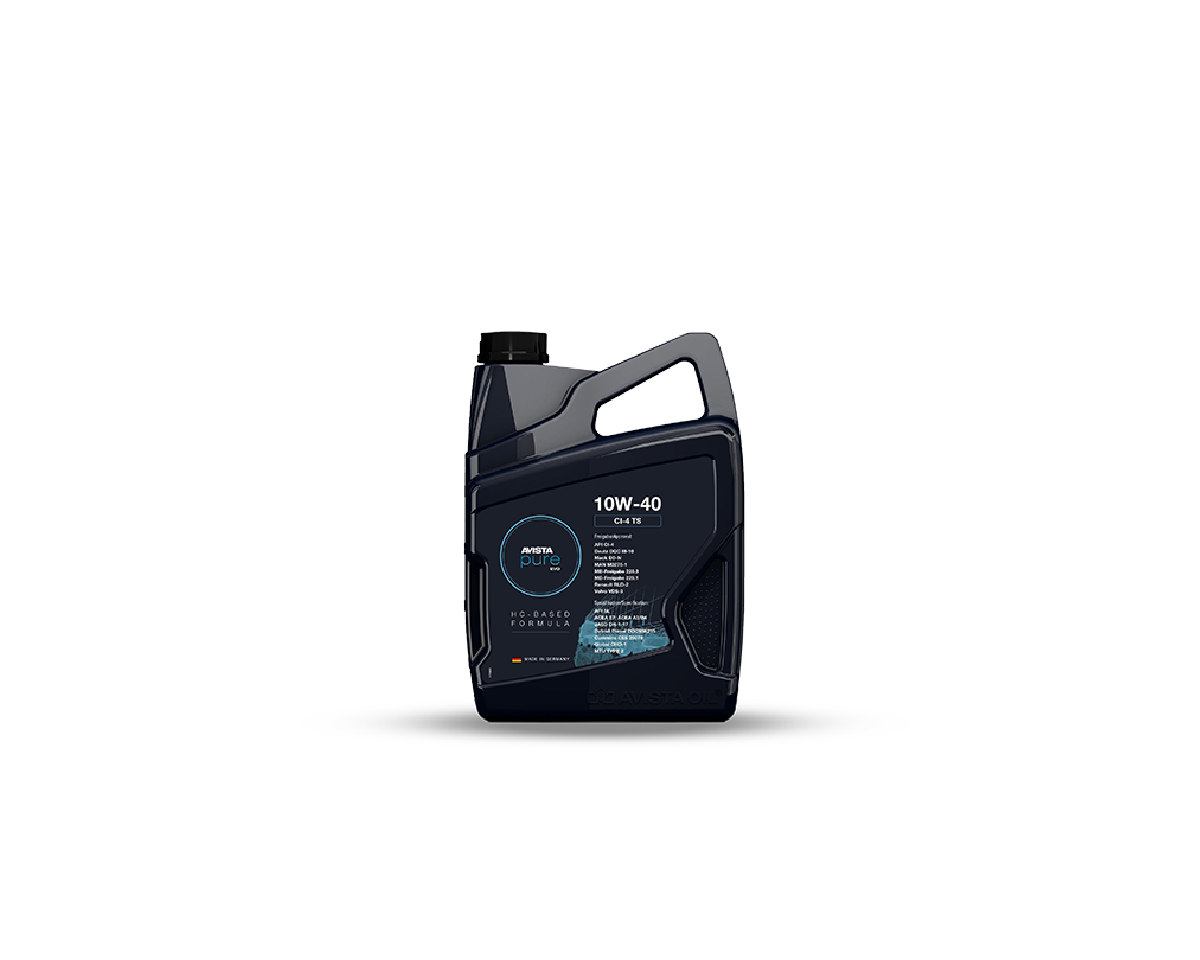
AVISTA Pure EVO CK-4 SAE 10W-40

AVISTA pure EVO CK-4 SAE 10W-40 is a premium HC-synthetic engine oil for heavy equipment and commercial fleets. It is developed for modern engines from Euro I to Euro VI emission standards, including engines with complex exhaust aftertreatment systems.

  • Kinematic viscosity at 100 °C 13.5 – 14.9 mm²/s, providing a strong protective film under high load.
  • Viscosity index minimum 137, maintaining properties under temperature variation.
  • Total Base Number (TBN) 7.9 – 9.9 mg KOH/g, neutralizing acids formed during combustion.

Key technical features

Kinematic viscosity at 100 °C
13.5 – 14.9 mm²/s, providing a strong protective film under high load.
Viscosity index
minimum 137, maintaining properties under temperature variation.
Total Base Number (TBN)
7.9 – 9.9 mg KOH/g, neutralizing acids formed during combustion.
Pour point
maximum -39 °C, ensuring safe cold starts in winter.
Manufacturer official approvals
Volvo VDS-4.5
Mercedes-Benz DTFR 15C110 (228.51) & 15C120 (228.52)
Deutz DQC IV-18 LA
Renault Trucks RLD-3
Mack EOS 4.5
MTU Type 3.1
Technical parameters

Key Parameters

ParameterTest MethodUnitValue / Range
Density at 15 °CDIN EN ISO 12185g/cm³0.845 – 0.885
Kinematic Viscosity at 100 °CASTM D7279mm²/s (cSt)13.5 – 14.9
Viscosity Index (VI)ASTM D2270min.137
Total Base Number (TBN)ASTM D2896mg KOH/g7.9 – 9.9
Dynamic Viscosity at -25 °C (CCS)ASTM D5293mPa*smax. 7,000
Flash Point (COC)DIN ISO 2592°Cmin. 200
Pour Point (Pour Point)ASTM D7346°Cmax. -39
  1. 01Main advantages
  2. 02Universal compatibility: fully replaces older standards (API CJ-4, CI-4, CH-4), simplifying the management of mixed-age fleets.
  3. 03Bore-polishing protection: effectively prevents cylinder wall polishing, helping maintain compression.
  4. 04Piston cleanliness: premium additives prevent piston-ring sticking and soot formation.
  5. 05Soot and wear control: binds soot, prevents sludge formation, and protects components against wear.
  6. 06Extended oil-change interval: thermal stability allows oil-change intervals to be maximized.
CallWhatsApp